Sewer Line Repair Cost (2026)
Sewer line repairs cost $150 to $3,800, depending on the method, and replacing the line costs $50 to $250 per linear foot, or $2,000 to $10,000 for 40 feet of pipe, according to HomeGuide (December 2025). This Old House puts the national average for sewer line replacement at “around $5,000” (April 2026). Your price depends on what is wrong with the pipe, which a camera inspection ($125–$500 in HomeGuide) shows before anyone quotes the repair.
What you’re seeing and how urgent it is
A single clogged drain “may not indicate a major issue,” This Old House says, but multiple or recurring problems throughout the house “often point to a failing sewer line.” When several drains are clogged at once, a blockage in the main line is “the likely culprit,” and gurgling toilets can be another clue. If sewage is coming up a floor drain, tub or toilet, that is a job for a licensed plumber now. Seattle Public Utilities advises avoiding flushing toilets or using other water appliances during a backup. Not sure what you have? Try our Leak Finder.
Cost by repair method
| Work | HomeGuide (Dec 2025) | This Old House (2026) | Bob Vila (2023; Angi, HomeAdvisor, This Old House) |
|---|---|---|---|
| Camera inspection | $125–$500 | $100–$500 | $100–$500 |
| Clearing the line by snaking | $200–$500 in the text; $150–$500 in its table | — | — |
| Hydro jetting | $600–$1,400 in the text; $250–$800 in its table | — | — |
| Tree root removal | — | $80–$1,000 | $100–$600 |
| Pipe bursting, per linear foot | $60–$200 | $60–$250 (all trenchless methods) | $60–$200 |
| Cured-in-place pipe (CIPP) lining, per linear foot | $90–$250 | $60–$250 (all trenchless methods) | $80–$250 “per foot” in one section, “per square foot” in another |
| Replacement by excavation, per linear foot | — | $50–$200 | — |
| Permit | $30–$500 | $100–$1,000 | about $200 |
This Old House has two numbers for a whole replacement job: “around $5,000” in its repair guide (April 2026) and $1,390 to $5,320, with an average of $3,320, in its replacement guide (March 2026, Angi data). The guides use different data, so the numbers don’t line up.
Pipe bursting and pipe lining are different jobs. Bursting pulls a new pipe through the old one and breaks the old pipe apart; lining builds a new pipe inside the old one. Our trenchless sewer repair cost guide compares them.
Seattle Public Utilities puts a repair without digging at “$100-170 per foot for re-lining or pipe bursting” in one guide and “$60-$200 per foot” in another. New York City’s Department of Environmental Protection says a sewer line break costs owners there “between $10,000 and $15,000” to repair on average.
What drives the price
- Length and depth. Longer lines need more material and labor, and deeper pipes “take more time and specialized equipment to reach,” This Old House says, especially in colder climates where lines run below the frost line.
- What sits on top of the pipe. Pipes under driveways, patios or foundations need extra work to reach and restore; HomeGuide adds $3–$8 per square foot for concrete removal.
- The method. Traditional excavation “is often less expensive upfront,” This Old House says, “but it can lead to higher restoration costs.”
Which part of the pipe is yours
The pipe from your house to the public sewer main is called the lateral; Seattle calls it the “side sewer.” Who pays to fix it depends on your city:
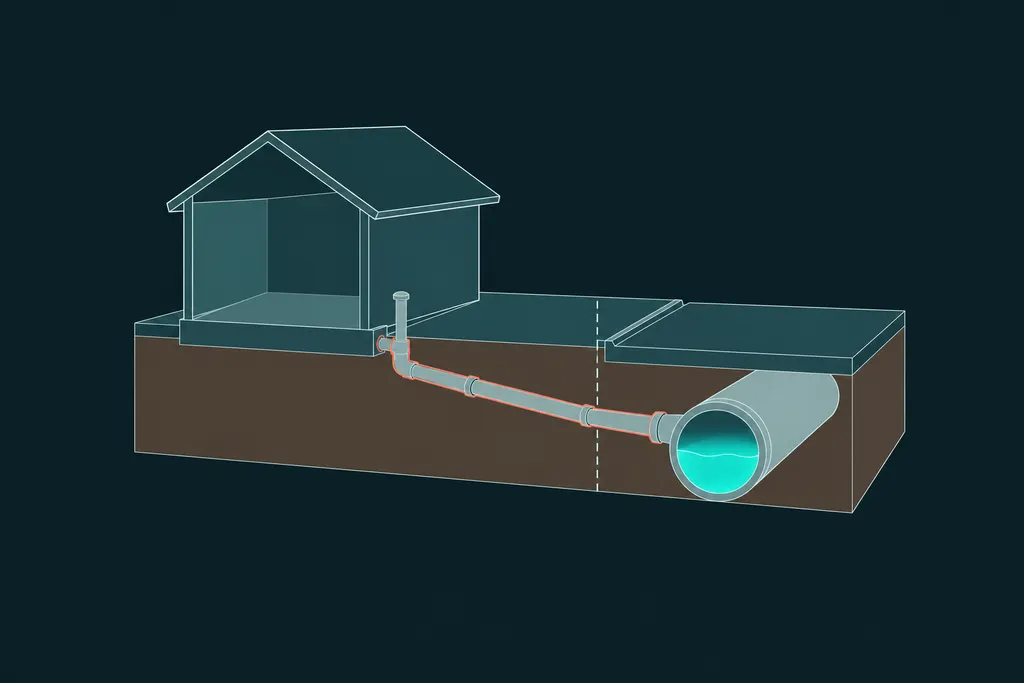
- Seattle: “If you own your home or building, you own your side sewer to the public sewer main,” which runs under a street near your home. If neighbors share a side sewer, they share responsibility from the point where their pipes join.
- New York City: property owners are responsible for the sewer service lines “that extend from the property to the city’s water and sewer mains in the street.”
- Philadelphia: the Water Department’s diagram (March 2026) lists the lateral and the slant, the connection to the public sewer, as “the sole responsibility of the property owner.”
- San Francisco: the owner owns the entire lateral, is responsible for maintaining and inspecting all of it, upper and lower, and must repair the upper section, from the building to the curb. If a plumber’s inspection finds a problem in the lower section, from the curb to the main, “that cannot be fixed with maintenance,” the owner submits a service request; the SFPUC inspects it and, “under most circumstances,” does the repair “at no extra cost to you.”
- Portland, Oregon: the owner is responsible for breaks from the house to the curb, including the sidewalk and parking strip; the City maintains laterals from the main to the curb line. The City adds that an owner “can be responsible for doing some repairs in the street,” such as a private line running parallel to the curb. Once the City notifies you of a break, you have 30 days to make repairs or ask for more time.
Cost guides give a general rule (HomeGuide says that “in most cases, homeowners are responsible” for the pipes that connect to the main line), but your city sets the actual boundary. Before you approve a repair under the sidewalk or street, check your own city or sewer utility’s website. Insurance is a separate question, covered in Does Homeowners Insurance Cover Sewer Lines?
Repair or replace the whole line
Seattle Public Utilities describes four main types of structural repair:
- Spot repair, where the defect is at one location, such as an offset joint, a collapsed section, or “roots that can’t be removed by another method.” A hole is dug to replace that section.
- Open cut construction, where several sections are bad and a long length of pipe is dug up and replaced.
- Pipe bursting (a pit at each end) and cured-in-place pipe (CIPP) lining, the two trenchless options above.
Not every defect needs work now: in Seattle’s guide, a minor offset joint needs no repair, while a moderate crack calls for inspecting every one to two years. This Old House says repairs are typically the better option when the problem is “small, localized, and the rest of the pipe is still in good condition,” and replacement is often more cost-effective when problems are widespread, recurring or caused by aging materials. Bob Vila notes that “when a pipe collapses, removal is the only option.” If roots are the cause, see tree roots in the sewer line.
How to compare plumber estimates
- Get at least three written bids. Seattle Public Utilities recommends it, and This Old House suggests at least three estimates from licensed plumbers. Large differences “may indicate differences in scope, materials, or repair methods.”
- Ask for the cause and location in writing. SPU suggests having the provider write down the probable cause and, if the line is rootered, the footage where the blockage was found, and mark the spot on the ground.
- Ask for a copy of the camera video. SPU says most contractors can provide one, and it helps if you ever file a claim with the city. More in sewer camera inspection cost.
- Ask about permits. In Seattle, permits are always required for side sewer repair work, but not for root removal or unclogging; in Portland, all sewer line repairs need a permit and inspection before the pipe is covered.
- Make sure 811 is contacted before any digging. The national before-you-dig service asks you to contact 811 “a few business days before you begin any digging.” Seattle Public Utilities also advises calling the gas utility before anyone tries to clear a side sewer blockage, to avoid damaging a gas line.
Sources
- HomeGuide — How Much Does Sewer Line Replacement Cost? (Dec 22, 2025)
- This Old House — Sewer Line Repair and Replacement (updated Apr 10, 2026; cost data from Angi and HomeGuide)
- This Old House — How Much Does Sewer Line Replacement Cost? (updated Mar 30, 2026; cost data from Angi)
- Bob Vila — How Much Does Sewer Line Replacement Cost? (updated Jan 27, 2023; sources listed: Angi, HomeAdvisor, This Old House)
- Seattle Public Utilities — Side Sewer Repair Methods (accessed Oct 31, 2026)
- Seattle Public Utilities — Your Side Sewer (accessed Oct 31, 2026)
- Seattle Public Utilities — Side Sewer Defects & Issues (accessed Oct 31, 2026)
- Seattle Public Utilities — Side Sewer Backups (accessed Oct 31, 2026)
- Seattle Public Utilities — Taking Care of Your Sewer Pipe (PDF, undated; p. 2)
- Seattle Public Utilities — Troubleshooting Your Sewer Problem (PDF, undated; pp. 1, 3)
- San Francisco Public Utilities Commission — How to Take Care of Your Sewer Lateral (Mar 11, 2024)
- City of Portland — Broken Sewer and Drain Lines: Guide to Repairs, Permits and Inspections (accessed Oct 31, 2026)
- Philadelphia Water Department — From Street to Sink: Water System Responsibility (PDF, 03/2026; p. 2)
- NYC Department of Environmental Protection — Service Line Protection Program (accessed Oct 31, 2026)
- Common Ground Alliance — 811 Before You Dig (accessed Oct 31, 2026)
Checked 2026-10-31
Illustrations on this page are AI-generated to help you picture the situation. They are not photos of real homes, jobs or people.