Slab Leak Repair Cost: Reroute vs Epoxy Lining vs Direct Access (2026)
“The average cost of slab leak repair is $2,300, but this type of work can range from $630–$4,400 or more,” according to This Old House (updated April 2026, with cost data from HomeAdvisor). Fixr (updated May 2025) gives $1,000 to $4,000, with a national average of $2,500, and runs from about $600 for leak detection plus a small epoxy repair to $15,000 for rerouting all the pipes from under the slab to the attic. The method matters: This Old House says the type of repair “often has the biggest impact on cost.” This Old House lists leak detection as its own line, at $150–$600; Fixr’s average and its $600 low end already include detection.
Slab leak repair cost by type of work
Three guides, three data sets. They name the work differently, so each row keeps the guide’s own label, and a dash means the guide gives no figure for that item.
| Work | This Old House (2026) | Fixr (2025) | HomeGuide (2025) |
|---|---|---|---|
| Finding the leak | $150–$600 (“slab leak detection”) | $100–$400 (“slab leak detection”) | — |
| Fixing the pipe itself | $200–$2,000 (“broken pipes”) | $200–$2,000 (“broken pipe repair,” repair only, not access) | $200–$2,000 (“replacing pipes”) |
| Breaking the slab or digging to reach the pipe | — | $500–$3,000 (“break the slab”) | $500–$3,000 (“digging”) |
| Tunneling under the house | — | $900–$2,000 | — |
| Accessing and repairing pipes under the slab | $500–$4,000 (“under-slab plumbing”) | — | — |
| Pipe lining | — | $500–$2,000 | $500–$3,500 |
| Rerouting plumbing | $1,500–$15,000 | $4,000–$15,000 | $3,900–$7,500 |
| Water line or water main | $300–$1,400 (“waterline repair”: the main supply line or a section of piping) | — | $400–$5,000 (“repairing a water main,” repair or replacement) |
HomeGuide’s headline numbers are by approach rather than a single average: $500–$3,500 for pipe lining, $700–$5,000 for “digging into the foundation and replacing damaged pipe,” and $5,400–$10,800 to replace the whole slab.
Reroute vs epoxy lining vs direct access
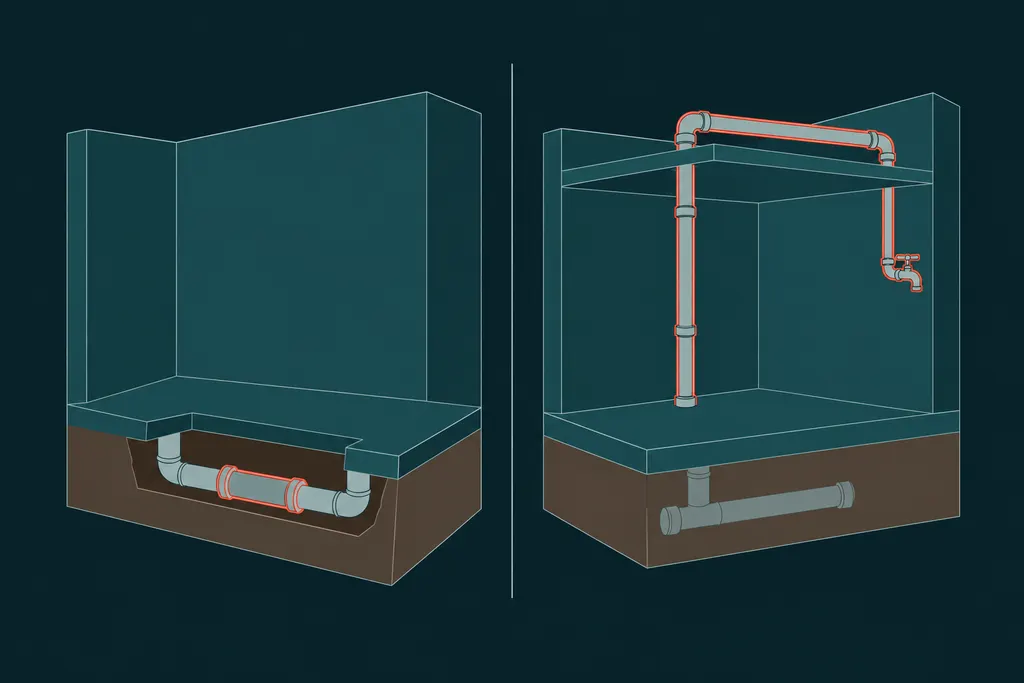
Direct access (opening the slab). This Old House describes the plumber jackhammering through the concrete over a small, easy-to-reach leak, cutting out the damaged section and replacing it. Fixr says breaking the slab “is usually the answer” when a trenchless sleeve isn’t possible and tunneling under the home isn’t either. Flooring over the spot has to come up first; Fixr notes it can sometimes be saved, but frequently has to be replaced after the concrete is patched.
Tunneling. Fixr calls it “a good option for anyone with expensive flooring,” because the crew digs in the soil under the home to reach the pipe instead of breaking through the floor. It “can only be done in areas where the soil is stable enough,” and homes with shifting or expansive soil “may not be good candidates.” Before anyone digs in your yard, 811 should be contacted a few business days ahead so buried utility lines get marked.
Epoxy pipe lining. This Old House describes plumbers cleaning the existing pipe and inserting “a resin-coated lining to seal the leak from within.” Fixr prices lining by the linear foot, so a longer pipe costs more, and warns: “This repair is not always an option for pipes under a slab.” HomeGuide calls lining expensive, but notes it does not require any digging or excavation. Lining a pipe is different from a spot epoxy fix: Fixr says some pipes “can be easily repaired with a small amount of epoxy,” a low-cost repair in its guide, once the plumber can reach them.
Rerouting. “Rerouting involves installing new pipes and abandoning the damaged lines,” This Old House explains, and it is “often used when pipes are deteriorating or multiple leaks are present.” Fixr says the new pipes “are usually rerouted through the attic,” and that with expansive soil and significant moisture issues rerouting “can give you a permanent solution rather than a temporary one.” This Old House adds that it avoids cutting through large portions of the slab but “can require more extensive labor to run new lines through the home.”
Our reading of the guides: a single leak in a spot that’s easy to reach points to direct access; several leaks or old, deteriorating pipe point to a reroute; lining depends on whether your pipe qualifies. Your plumber’s findings decide, and Fixr notes there may be just one choice that will solve the issue permanently.
What drives the price
- Method and access. This Old House lists the type of repair, where the leak is (especially under finished flooring or deep within the slab), the extent of the damage, and whether the slab must be opened and restored.
- Pipe and site. Fixr adds pipe type, slab thickness, soil and leak size.
- Room. HomeGuide says a leak in a garage or utility closet costs less to repair than one under a kitchen or bathroom.
- Labor. Fixr puts plumbers at $45–$200 an hour, with most people paying $75–$130, and a minimum labor charge of around $150–$200 on small jobs. HomeGuide gives $45–$150 an hour.
- Time. This Old House says it typically takes one to three days to fix a slab leak. Fixr says trenchless repairs can take a couple of hours, tunneling 4–6 hours, breaking the slab 1–2 days, and rerouting the longest.
Hidden costs: concrete, flooring, drywall, water damage cleanup
The pipe repair is often not the whole bill. Prices for the follow-up work, as each guide lists them:
| Follow-up work | This Old House (2026) | Fixr (2025) | HomeGuide (2025) |
|---|---|---|---|
| Patching the slab (Fixr: the access cut; HomeGuide: cracks) | — | $250–$800 | $250–$800 |
| Foundation repair after the slab is opened | $2,000–$7,500 | — | — |
| Replacing a water-damaged subfloor | — | $500–$1,000 | — |
| Full slab replacement | $3,600–$8,000 | $4,000–$8,000 | $5,400–$10,800 |
| Floor repair | — | — | $200–$1,200 minor; $500–$6,000+ major (pipe leak guide) |
| Drywall repair | — | — | $50–$100 per sq ft (pipe leak guide) |
| Plumbing permit | — | — | $30–$500 |
HomeGuide also flags debris disposal (ask whether it’s in the estimate) and mold remediation if the leak ran long enough to cause it. If water soaked floors or walls, water damage restoration and cleanup is a separate trade from the plumbing repair.
Does insurance help?
The NAIC says homeowners policies cover damage from a “sudden and accidental” discharge from a plumbing system. Whether that includes opening the floor, the pipe itself, or the slab depends on your policy’s wording. Check your policy and ask your insurer or agent before work starts; Fixr also suggests calling your insurance company first to find out what is covered. More: is a slab leak covered by insurance.
Questions to ask your plumber
- Where exactly is the leak, how did you find it, and is it the hot or cold line?
- Which methods are possible for my house (opening the slab, tunneling, lining, rerouting), and what would each cost?
- If you open the slab, does the price include patching the concrete and replacing the flooring?
- If you reroute, where will the new pipes run, and what will need patching afterward?
- Is a permit needed? Fixr says permits are not always necessary; check with your municipality.
- What warranty comes with the work? Fixr says some rerouting comes with a warranty, while repairs beneath the slab do not usually come with one.
HomeGuide suggests getting at least three in-person estimates and being wary of anyone who recommends a full slab replacement without a thorough inspection. Not sure it’s a slab leak yet? Start with the signs of a slab leak or the Leak Finder, and see what leak detection costs.
Not sure where the water comes from?Run the Leak Finder →Sources
- This Old House — How Much Does Slab Leak Repair Cost? (2026 Guide) (updated Apr 7, 2026; cost data from HomeAdvisor)
- This Old House — What Are the Signs of a Slab Leak? (updated May 27, 2026)
- Fixr — Slab Leak Repair Cost (updated May 1, 2025)
- HomeGuide — How Much Does a Slab Leak Repair Cost? (Oct 29, 2025)
- HomeGuide — How Much Does a Pipe Leak Repair Cost? (Oct 29, 2025)
- NAIC — Will My Homeowners Insurance Policy Cover Water Damage From a Burst Pipe? (Feb 8, 2024)
- Call 811 (Common Ground Alliance) — 811 Before You Dig (accessed Oct 31, 2026)
Checked 2026-10-31
Illustrations on this page are AI-generated to help you picture the situation. They are not photos of real homes, jobs or people.