Slab Leak: Signs, Causes, What to Do
A slab leak is a leak in a water pipe that runs under a home’s concrete slab foundation. The signs This Old House’s cost guide lists start small (a slightly higher water bill, faint sounds of running water when nothing is on, a small drop in water pressure) and move on to damp or warm spots on the floor, mold or mildew, and, in advanced cases, warped flooring and foundation cracks. If you notice them, check your water meter with all water turned off, shut the main valve if water is spreading and you can reach it safely, and call a licensed plumber to locate the leak before anyone opens concrete. This Old House puts the average repair at $2,300, with a range of $630–$4,400 or more.
Signs of a slab leak
This Old House’s slab leak cost guide groups the signs by how far a leak has gone:
| Stage | What you may notice |
|---|---|
| Early | A slight increase in your water bill; faint sounds of running water when fixtures are off; minor drops in water pressure |
| More noticeable | Damp or warm areas on the floor; mold or mildew; visible water damage under flooring or carpet |
| Advanced | Warped flooring; cracks in the foundation; persistent moisture around the home’s perimeter |
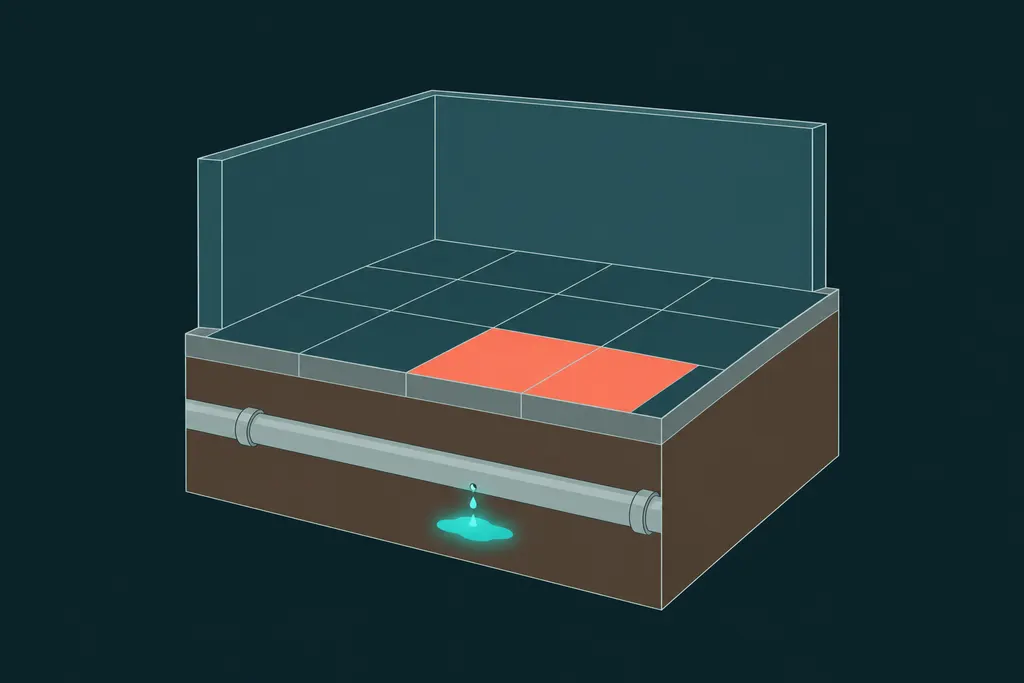
A few details help you read these signs:
- A warm spot. This Old House says warm “hot spots” on a floor “typically align with the path of a leaking hot water pipe.” It also warns that prolonged exposure to hot spots can be dangerous for young children and pets.
- Damp carpet near a wall. These patches “are often found near walls or baseboards,” per This Old House, because the water comes up from underneath. A spill dries and stays dry; dampness that keeps coming back is the warning.
- Outside the house. Fixr adds puddles in the yard and unusually lush grass near the foundation. Since rain pools too, This Old House suggests watching for standing water that remains for days after dry weather.
None of these signs proves a slab leak on its own. This Old House points out that wall cracks can also come from a structural issue, and low pressure can come from clogged or damaged pipes. That is why the next step is the meter.
Check the water meter first
The U.S. EPA’s WaterSense program gives a simple test: “Check your water meter before and after a two-hour period when no water is being used. If the meter changes at all, you probably have a leak.” Turn off faucets, the dishwasher, the washer and irrigation before you start.
A moving meter tells you water is escaping somewhere, not where. The EPA says common household leaks are “worn toilet flappers, dripping faucets, and other leaking valves,” and it suggests a toilet test: a few drops of food coloring in the tank, and if color shows up in the bowl after 10 minutes, the toilet leaks. Rule those out before you assume the slab. Our Leak Finder walks through the meter check.
What to do first
- If water is spreading, shut off the main valve if you can reach it safely. This Old House says to do this when you see significant water or hear a strong rushing sound; for smaller or less obvious leaks you may be able to skip it. Keep away from water near outlets or appliances.
- Photograph everything. This Old House suggests photos of damp spots, cracks and your water meter readings. The Texas Department of Insurance (TDI) advises taking pictures or videos of the damage before making any repairs and not throwing away damaged items until your adjuster has seen them.
- Start drying. TDI says, “Mold can start growing within a day after a leak.” Pull up wet rugs and move wet items to a dry room. If the water already soaked flooring or drywall, ask about water damage restoration and cleanup.
- Tell your insurer early. Fixr suggests calling your insurance company first “to find out what is covered.” In Texas, TDI says you usually must report water damage that was hidden from view within days after you first see it. Rules and deadlines vary by policy and state.
- Call a licensed plumber. This Old House calls slab leak repair “not a DIY job” and advises calling a plumber as soon as you suspect one.
What causes slab leaks
This Old House lists abrasion from debris or sediment carried in the water, corrosion as pipes age, high water pressure, poor installation, a shifting foundation (soil movement, seismic activity, tree roots) and acidic or alkaline water. Fixr adds expansive soils that swell and shrink and put pressure on the slab and pipes. The full picture, and what you can do about each cause, is on what causes a slab leak.
How a plumber confirms the leak
Finding the leak is a separate job from fixing it. Fixr describes plumbers testing water pressure, examining the slab for cracks and moisture, and checking the landscaping; some leaks take minutes to find, others over an hour and drilled holes. This Old House’s plumbing and heating expert Richard Trethewey recommends video inspection to limit how much of the slab has to be opened.
| This Old House (2026) | Fixr (2025) | |
|---|---|---|
| Slab leak detection | $150–$600 | $100–$400 |
More on methods and prices: slab leak detection cost.
Repair options and cost factors
This Old House says the type of repair “often has the biggest impact on cost,” along with how easy the leak is to reach. The main approaches, as the two guides describe them:
| Work | This Old House (2026) | Fixr (2025) |
|---|---|---|
| Slab leak repair overall | $630–$4,400+ (average $2,300) | $1,000–$4,000 (average $2,500) |
| Repairing a broken pipe under the slab | $200–$2,000 | $200–$2,000 (repair only, not access) |
| Rerouting plumbing | $1,500–$15,000 | $4,000–$15,000 |
The guides use different data, so the columns are not a like-for-like comparison. Fixr’s $2,500 average covers leak detection, tunneling repair and foundation crack filling, so detection is already in it. Opening the slab, tunneling, pipe lining, concrete patching and new flooring are priced separately; the full breakdown, and when each method makes sense, is on slab leak repair cost.
Insurance basics
The NAIC says homeowners policies cover damage from a “sudden and accidental” discharge from a plumbing system. In Texas, TDI says policies usually won’t cover damage from gradual leaks, and its home insurance guide lists damage to foundations or slabs among common endorsements (policy add-ons). Policies vary, so check your policy or ask your insurer or agent. Details: is a slab leak covered by insurance.
What to ask the plumber
- How will you locate the leak, and what does detection cost on its own?
- Is the leak on a hot or cold line, and on the supply or a drain?
- Which repair options fit my house (opening the slab, tunneling, lining, rerouting), and why? Fixr notes that sometimes a plumber can offer options and sometimes only one choice will solve the issue.
- Does the price include patching the concrete and replacing the flooring?
- Is a permit needed? Fixr says permits are not always required, so check with your municipality.
- What warranty comes with the work? Fixr says some rerouting comes with a warranty, while repairs beneath the slab do not usually come with one.
This Old House suggests getting quotes from more than one plumber if you aren’t facing an urgent leak; HomeGuide recommends at least three in-person estimates.
Not sure where the water comes from?Run the Leak Finder →Sources
- This Old House — What Are the Signs of a Slab Leak? (updated May 27, 2026)
- This Old House — How Much Does Slab Leak Repair Cost? (2026 Guide) (updated Apr 7, 2026; cost data from HomeAdvisor)
- Fixr — Slab Leak Repair Cost (updated May 1, 2025)
- U.S. EPA WaterSense — Fix a Leak Week: Checking for Leaks (page last updated Mar 13, 2026)
- Texas Department of Insurance — When are water damage and mold covered by insurance? (updated Apr 24, 2025)
- Texas Department of Insurance — Home insurance guide (updated Jun 1, 2026)
- NAIC — Will My Homeowners Insurance Policy Cover Water Damage From a Burst Pipe? (Feb 8, 2024)
- HomeGuide — How Much Does a Slab Leak Repair Cost? (Oct 29, 2025)
Checked 2026-10-31
Illustrations on this page are AI-generated to help you picture the situation. They are not photos of real homes, jobs or people.